
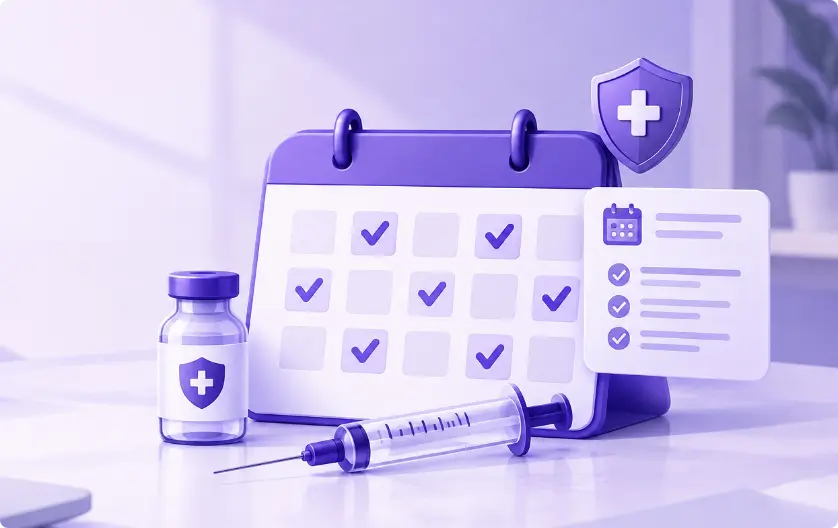
Many people assume their doctor will tell them when a vaccine is due. Sometimes that happens, but often it doesn’t. Doctors are busy, visits are short, and most appointments are about something else, like a cough or a check-up. Your records may also be split across different clinics, pharmacies, and even countries. The result is that missed vaccines slip through even for people who see a doctor often.
Some vaccines are one dose, while others require multiple doses or periodic boosters. Your body builds protection in steps, and some of that protection fades over time. That’s why vaccines come with a schedule, telling you when each dose should happen. This way your protection stays strong at the right time, not too early and not too late.
Making that schedule sounds easy at first. You get a shot, the nurse tells you when to come back, and you promise yourself you’ll remember. Then life moves on. The date sits on a slip of paper, in a text message, or only in your head. Weeks turn into months, and one day you realize you’re not sure when you were supposed to go back, or if you ever did. Most people don’t skip a dose on purpose. They just forget, and they don’t find out until someone asks for a date they can’t give.
This read is all about planning and tracking your vaccine properly, so you always know what you have had, what you still need, and when the next dose is due.
How Do I Track Vaccination Dates?
The hardest part of adult vaccines is not getting the shots. It is remembering them years later. A flu shot from a pharmacy, a tetanus booster from an urgent care visit, a first shingles dose from a clinic you never went back to. Over time, these records scatter across paper slips, old emails, and photos buried in your phone.
When a new job, a travel form, or a new doctor asks for proof – you are left guessing. The simple fix is to save the same few details after every shot in one place you trust.
This table shows the reminder you can set for your vaccinations related chores:
| What to Save | Why It Helps |
|---|---|
| Vaccine Name | Shows exactly what you are protected against |
| Date Given | Tells you when the next dose or booster may be due |
| Dose Number | Shows how far along you are in a vaccine series |
| Clinic or Pharmacy | Helps you get official proof of vaccination later |
| Next Due Date | Lets you plan ahead instead of guessing |
| Photo of the Record | Gives you a backup copy you can access when needed |
Many people now keep this in a memory app on their phone rather than in a drawer. All they do is take a photo of the vaccine card right after the shot, save the details with it, and get a gentle reminder a few days before your next dose is due. Years later, when a doctor asks about your last tetanus shot, the answer is already in the app.
How to Plan Your Vaccination Schedule
To plan a vaccination schedule all you need are three details for every vaccine: what it is, who it’s for, and when it’s due. Once you have those written down, the rest falls into place.
Start with the vaccines you’ve already had and the ones your doctor says you still need. Use the exact name from your record or ask the clinic to spell it out. A clear name means no confusion later.
If you’re planning for more than yourself, like a partner, a child, or an aging parent, put the person’s name next to each vaccine. This keeps everyone’s schedule in one place without mixing them up.
Now some vaccines are one-time. Some come in two or three doses a few weeks or months apart. Others come back every year or every ten years. Write the date of the last dose and the date the next one is due, not just “soon” or “next year.”
Set a reminder for every next date so you have time to book a visit. Each time you get a vaccine, add the new date and the next due date right away, before you leave the clinic.
The table gives you a simple checklist to track every vaccine for yourself and your family in one place. Tick the boxes as you set reminders and get each shot, so nothing gets missed.
| Person | Vaccine name | Dose | Last dose date | Next due date | Reminder set | Done |
|---|---|---|---|---|---|---|
| Me | Shingles | 1 of 1 | 02-07-2024 | 04-09-2024 | ✓ | |
| Partner | 2 of 3 | |||||
| Child | 1 of 2 | |||||
| Mom | Yearly | |||||
| Dad | Every 10 years |
How to fill it in
- Person: Who the vaccine is for.
- Vaccine name: The exact name from the record.
- Dose: Which dose it is, or how often it repeats.
- Last dose date: The date of the most recent shot.
- Next due date: The actual date, not “soon” or “next year.”
- Reminder set: Tick it once a reminder is on your phone or calendar.
- Done: Tick it after the shot, then add a new row for the next dose.
How Do I Keep My Vaccination Records Safe?
Your vaccine record counts more than you might think. You’ll need it for admissions, travel, medical appointments, and keeping track of future doses. Yet so many people end up with records spread everywhere. Your most important record is either lying in a drawer, somewhere lost on the phone, or in an old diary.
The easiest fix is to keep everything in one place. Record each vaccine name, the date it was given, and when the next one is due. When it’s all saved together, you can find it in seconds, even years from now. Try pairing that with reminders for upcoming dates, and you won’t have to hold it all in your head.
The best reminder is MInt Memo that stores all records safely. All you have to do is take a photo of the vaccine record and save it in Mint Memo. You can keep the vaccine name, date, and other important details with the photo.
When you need to check a past vaccine or prepare for the next appointment, you can find the record without searching through drawers, folders, or old paperwork. This helps even when you change doctors, move to a new city, travel, or need to show your vaccination history.
What to Do If You Miss a Vaccine Date?
Missing a dose is very common, and in most cases, it is easy to fix. The main thing is not to wait, because the longer the gap, the longer you go without full protection. The key is to act soon. The longer the gap, the longer you’re spending days without full protection. A quick call is all it takes to fix it. This is what you should be doing:
1. Contact Your Vaccination Provider
Call the clinic, pediatrician, or vaccination center and explain which appointment was missed. Take the vaccination card or records with you. The provider can check which doses have already been given and determine what is now due.
2. Ask for a Catch-Up Schedule
Do not simply repeat the original dates yourself. The timing between doses can vary by vaccine and age. A healthcare provider can use the appropriate catch-up schedule to determine the next dose and the minimum interval required before another dose.
3. Do Not Restart the Series
For many routine childhood vaccines, a delayed dose does not mean the series must be restarted. CDC catch-up guidance specifically states that vaccine series generally do not need to be restarted because of a long gap between doses.
4. Keep the Next Date Clear
After the missed dose is given, record the next appointment immediately. Ask the provider when the following dose is due and set up a reminder several days beforehand.
Mint Memo saves your records, shows you what you’ve had, when you had it, and which dose comes next. Take that to your doctor, get the missed shot, then save the new date and set up a reminder before you leave the clinic. This habit does more than keeping you on schedule. It changes how you think about your own health. Instead of waiting for a doctor, a form, or an emergency to tell you what you missed, the app tells you first with a reminder before the date slips by.
Summing It Up
Keeping up with vaccines is one of the quiet ways you take care of yourself. The hardest part is often not getting the shot. It is remembering which vaccines you have already had, when you had them, and when you may need the next dose or booster.
Life gets busy, records get misplaced, and something that felt important a few years ago can easily disappear from your mind. You do not need to memorize every vaccine rule or keep a complicated chart in your head. You simply need a clear record of what you have had and what is due next.
A simple plan can make this much easier. Keep your vaccine records in one place, review them once a year, and set reminders for anything that needs attention. That way, you are not trying to remember everything when the time comes. You have already done the thinking ahead of time, and Mint Memo can take care of the reminders so you can stay on track without having to keep another date in your head.